Spilling waves are the friendly ones. Found on gently sloping, flatter beaches, they crumble gently from the top as they roll in rather than breaking all at once. These are generally the easiest and safest waves to swim and play in.
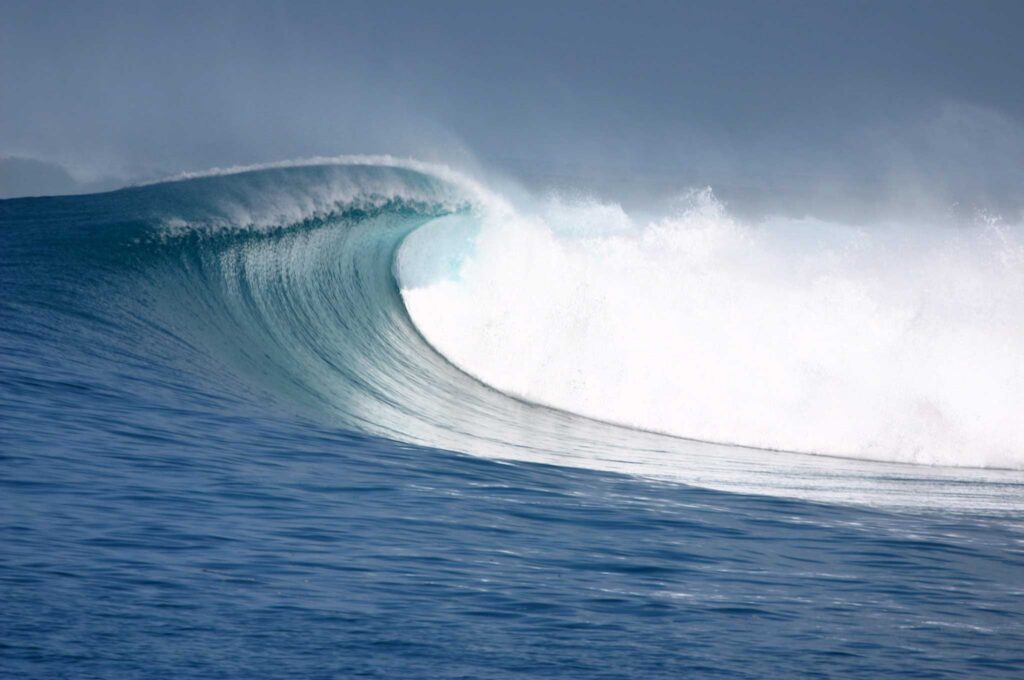
Dumping waves are the ones with a bit of attitude. They curl over and break all at once, sometimes forming that hollow “barrel” shape you see in surf photos, and they can pick up a swimmer and put them down hard on the sand or a sandbank. Fun to watch from a safe spot, best treated with a bit of respect if you’re in the water near them.
Surging waves are the sneaky ones. They tend to show up around rocks and steeper beaches, and because the water stays deep right up to the edge, they might not break at all, they just surge in, catch you off guard, and pull back out again. These are the ones most likely to catch someone standing on rocks or the water’s edge who wasn’t expecting it.
None of this is about avoiding the water, waves are half the fun of the beach. It’s really just about taking a minute to watch how the waves are behaving before you jump in, choosing a patrolled beach between the red and yellow flags where lifesavers are already reading the conditions for you, and having a bit of extra respect for dumping and surging waves in particular. A quick look, a bit of patience, and you’re set up for a great day in the water.